This is a poem I wrote a few years ago about my dog Teddy. He’s since passed away. He was a rescue dog of questionable breed, but his quirky and goofy love was never in question.
He Hears The Jet Stream
I am not sure if the jet stream
is a low thundering subwoofer.
I am not sure if the jet stream
is a twittering or scratching flit
of a mosquitoes wings.
But my dog can hear the jet stream
miles above the stratosphere
an imperceptible force pushes
temperatures across the globe.
My dog hears the jet stream
and his ears twitch
the hairs in his nose bristle.
A deep breathy woof comes out of his throat answering the jet stream.
And the jet stream brings us winter
and he is a bit like winter at least the good parts… A warm blanket a cozy fire a cup of cocoa.
If this poem resonated with you—if it made you smile, remember a beloved dog, or pause for a moment of quiet wonder—there’s more like it. This piece comes from a collection filled with reflections on loyalty, presence, love, and the small sacred moments that shape our lives. The book is available on Amazon, and it’s meant to be read slowly, the way you’d sit with a good memory or a faithful companion at your feet. If Teddy’s story stirred something in you, I think you’ll find more pages that do the same.Get “When Sea Billows Roll” today.
There’s a question church leaders and pastors sometimes ask themselves when they’re trying to measure impact:
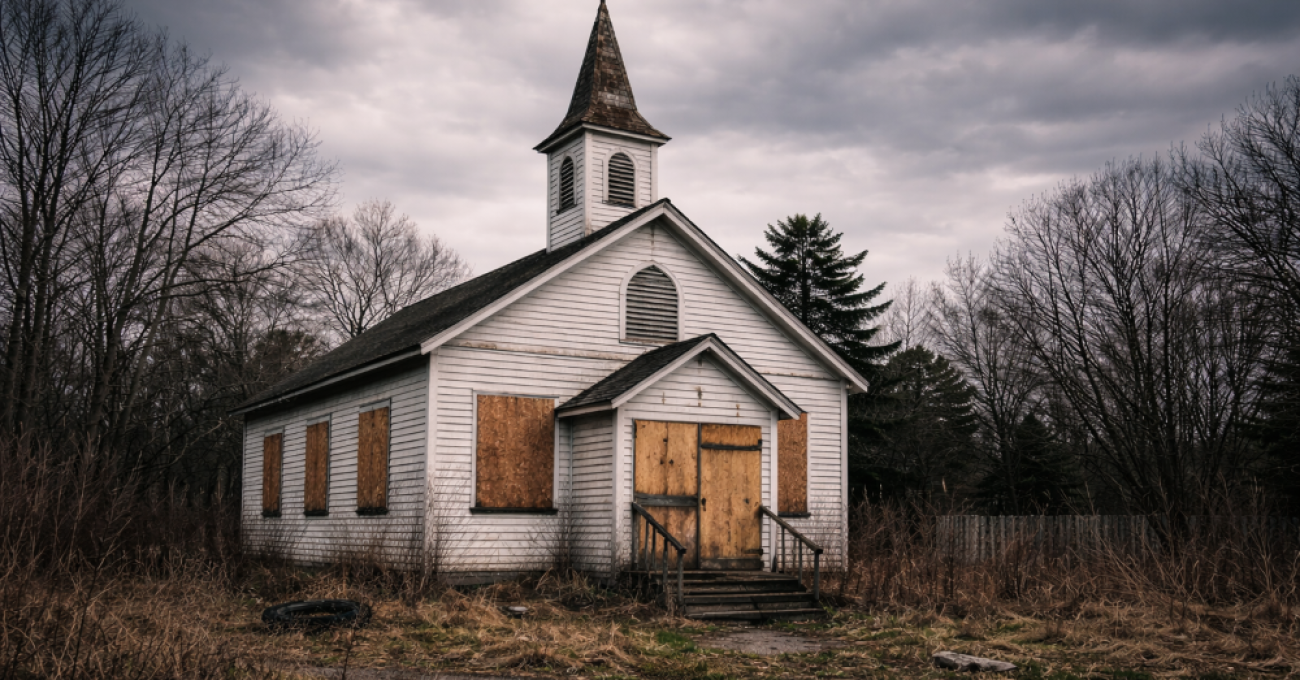
“If our church disappeared tomorrow, would anyone notice?”
Recently, I explored that question directly in a piece I wrote for my own church and community in Bradford, Pennsylvania. In that article, I asked what would actually be lost if Open Arms Community Church vanished overnight — not hypothetically, but practically, relationally, and locally.
But wrestling with that question led me deeper — to the heart of what it actually means to be the church.
When Church Becomes an Event
One of the things Francis Chan challenges in Letter to the Church is this idea that church is what happens on Sunday morning. He writes:
“We have started to believe that if people show up to a church service, they are actually being the church.” (from Letter to the Church )*
That hits right at the heart of the disconnect many communities feel when a church closes its doors. The loss isn’t the gathering itself — it’s what the gathering should have been producing: people shaped to love, serve, and walk with others in life’s real moments.
The Quiet Work No One Counts
Church impact is often measured in numbers — attendance, budgets, social media reach. But none of those metrics capture the quiet, invisible work that actually shapes a town.
It looks like:
Someone answering their phone when another person is unraveling
A few people consistently showing up for those trying to get sober
Meals cooked quietly, prayers offered privately, rides given without recognition
Relationships that form before crisis hits — not just after
Chan pushes this exact point when he says the goal isn’t to attract people to an event, but to equip them to obey Jesus in everyday life:
“The goal of the church was never to attract people to a service, but to equip people to obey.” (from Letter to the Church )*
That kind of presence doesn’t announce itself. And because it doesn’t announce itself, it’s easy to underestimate its value — until it’s gone.
When Churches Close, Communities Thin Out
Across the U.S., many congregations are closing their doors. In some towns, the buildings are repurposed or demolished — but what isn’t easily replaced is the people network that formed around them.
One deep question Chan presses is this:
“If the Church were to disappear, would anyone notice? And if so, what would they miss — a building, or a people?” (from Letter to the Church )*
That’s not a rhetorical challenge — it’s an invitation to evaluate what churches are actually incarnating in their communities.
When a church disappears, what often goes with it is:
A consistent place of belonging for people on the margins
Informal care networks that don’t require paperwork or eligibility
Leaders and members who know names, stories, and wounds
A culture of showing up without needing to be paid or praised
Social services matter. Nonprofits matter. But churches uniquely occupy a space where relationship comes before efficiency — and that’s not easily replaced.
Being Missed Isn’t the Same as Being Seen
Some church evaluation tools ask “Would the town miss us if we were gone?” But what matters far more is who would miss you and why.
Chan’s emphasis isn’t on visibility, but on obedience — on whether people shaped by the church are still living it out when the building is closed.
If a church were gone tomorrow, the real question isn’t whether the town would notice — it’s whether the people formed by the church would still be showing up, still loving well, still serving, still caring.
Because when churches do their best work, they don’t just gather people — they form them.
And formed people don’t disappear when buildings do.
I’ve said this sentiment before. I want to say it again — with more clarity.
As finite human beings, we have a limited amount of emotional energy and empathy. That’s not a flaw. It’s a feature. Empathy was given to us so we could make a difference in our actual lives — within a series of ever-expanding spheres of influence.
But the culture we live in tells us something different.
It tells us that empathy should primarily move us to action outside our spheres of influence.
Because we have digital reach, every post becomes a “letter to the editor.” We comment on the happenings in Minnesota, California, Myanmar, or Washington, D.C. — often places we don’t live, systems we don’t participate in, and outcomes we have no meaningful ability to influence.
We do this armed with weaponized information, carefully curated to align us on one side or the other.
And we tell ourselves our words are “making a difference.”
But in reality, we have absolutely no say in most of these matters.
Meanwhile, we can find ourselves emotionally invested in injustices toward puppy dogs on an island in the South Pacific… …and then somehow have nothing left to show up for our neighbor. Or our kids. Or our spouse. Or even our own mental health and wellbeing.
This isn’t an argument for apathy.
It’s an argument for stewardship.
Empathy is a precious resource. When we spend it indiscriminately, we exhaust ourselves without changing anything.
That doesn’t mean we should never care about what happens outside our spheres of influence. It means we need to budget our emotional resources if we actually want to help real people.
If I’m constantly told I need to have compassion for people I will never meet — and the required action of that compassion is merely agreeing with a philosophy or typing words into a comment section at 11:00 p.m. — then I’m not being virtuous.
The better questions are these:
Who can I show compassion to today? Where can I actually make a difference? Who needs me to show up for them right now? And how do I take care of myself so I’m strong enough to take care of others?
Carpetbombing empathy does little to penetrate the bunkers of evil scattered across the world.
But applied empathy — focused, intentional, embodied — can change the lives of the people right in front of us.
And that’s where real change almost always begins.
This journal came out of a season where I needed to stop lying to myself.
Not out loud. Quietly. Internally. The kind of lying where you stay busy, stay productive, stay useful—so you don’t have to slow down and actually look at what’s going on inside you.
Writing interrupted that.
Putting words on paper forced me to pay attention. To frustration I kept glossing over. To patterns I already knew were there but didn’t want to deal with yet. To questions that didn’t have clean answers.
I wasn’t writing to create something for other people. I was writing to stay engaged with my own life.
Over time, that practice took shape. A rhythm. Short reflections. Questions that didn’t let me hide. Space to tell the truth without needing to impress anyone.
Eventually, those pages became Fight Like Hell.
Doing the Work Alone… and Then Not Alone
For a long time, this work was just mine.
Then I took a small group of guys through it for a month.
We didn’t add anything fancy. No extra curriculum. No motivational talks. All we did was go through the journal together.
Each day, we worked through the prompts on our own. We shared—honestly—what we were seeing and working on in a group chat. Once a week, we got on a call and talked it through.
That was it.
And it was transformational.
Not because anyone had the right answers. But because men showed up. They named things they’d never said out loud before. They stayed with uncomfortable truths instead of running from them. They listened to each other without fixing or posturing.
I watched clarity emerge. Ownership deepen. Walls soften.
It confirmed something I already suspected: the journal works best when it’s actually used—especially when men stop pretending they’re fine.
We’ll be doing it again.
When Other Men Put Words to It
Around the same time, I started getting messages and reviews that stopped me cold.
One man wrote:
“This was the absolute best journal for a man suffering from a devastating setback and aiming to rebuild himself.”
Another said:
“If you are ready to dig deep, this book will make you do it.”
Then there were words I didn’t know what to do with at first:
“This book saved my life.” “This book is no joke.”
I sat with those.
I still do.
I don’t believe a book saves anyone. I do believe that creating space for honesty—real, unfiltered honesty—can change the direction of a life.
Why the Journal Is the Way It Is
The journal is simple on purpose. Short sections. Direct questions. Enough structure to keep you showing up, enough space to let the truth surface.
The audio—where I read the reflections out loud—came from my own experience. Some days, I needed to hear the words while my pen moved. It helped me stay present when my mind wanted to check out.
Nothing in this journal was added to make it more impressive. It was added because it helped me stay honest.
Why I’m Still Grateful for This Work
Fight Like Hell exists because I needed a place to stop drifting.
The fact that other men have used it while rebuilding their lives, walking through hard seasons, or finally dealing with things they’d been carrying for years—that humbles me.
Let’s be honest—life isn’t always sunshine and mountaintop moments. Sometimes, it feels like you’re wandering through the shadows, barely able to see your hand in front of your face. I’ve been there. Maybe you have too.
Over the years, I’ve talked openly about wrestling with darkness, doubt, and that heavy feeling of hopelessness that tries to settle in when the world seems upside down. And if you’re reading this, chances are you’ve felt it too.
But here’s the truth: you’re not alone, and you don’t have to stay stuck in that place.
Recently, I wrote a piece for Open Arms Community Church called “When Life Feels Dark: How to Overcome Hopelessness”. In it, I get honest about what it’s like to walk through those dark seasons—and, more importantly, how you can find your way back to hope.
If you or someone you care about is struggling to find light at the end of the tunnel, I believe this post will encourage you. I share practical steps, some hard-earned wisdom, and a reminder that there’s always hope—even when you can’t see it yet.
This week the case study is Josh Hatcher. Who is Josh you ask?
Josh Hatcher is a storyteller, poet, and master of practical advice. Hatcher is a personal development author, poet, and songwriter living in Bradford, PA. As a husband, father, and grandfather, Josh draws inspiration from his family, from his faith, and from nature. He has a background in journalism, broadcasting, and marketing, and finds fulfillment in being creative and mentoring others. Josh is the founder of Manlihood.com, and the host of the Manlihood ManCast. Manlihood helps men be better men through personal development resources and building a brotherhood hoping to level up as men.
n this episode, Dr. Cam interviews Josh Hatcher. Josh is a writer, port, musician, and father of 3. Dr. Cam and Josh talk about Josh’s upbringing, how he survived bullying and got involved in creative outlets to manage his stress. Also, Josh talks about becoming a father and how his entire perspective on life, happiness and fulfillment changed.
Chapters:
00:00 Intro
03:25 What was Josh’s upbringing like
06:00 How Josh dealt with bullying as a child
12:00 How music and creative outlets saved Josh’s life while dealing with bullying
18:00 Why men should journal and learn how to cope with stress or trauma
23:50 How Josh became a musician and learned why affirmation is so important
28:00 Why a man’s relationship with their father is so important
32:00 Why emotional expression is harder for men
35:40 How Josh met his wife and how quickly he knew he was in live
40:00 What makes a good and healthy relationship
42:00 Why Values are more important than interests when i comes to dating and relationships
47:00 How societies ideals about having kids have changed
49:00 How having twins changed Josh’s perspective on life and whats really important
51:30 Advice for men who are scared of becoming a father
55:00 Why men and women should have children before their mid 30’s
59:00 Why relationships are hard and how to keep working on yourselves
An honest look at what stops revival from happening
“I wish that would happen here!”
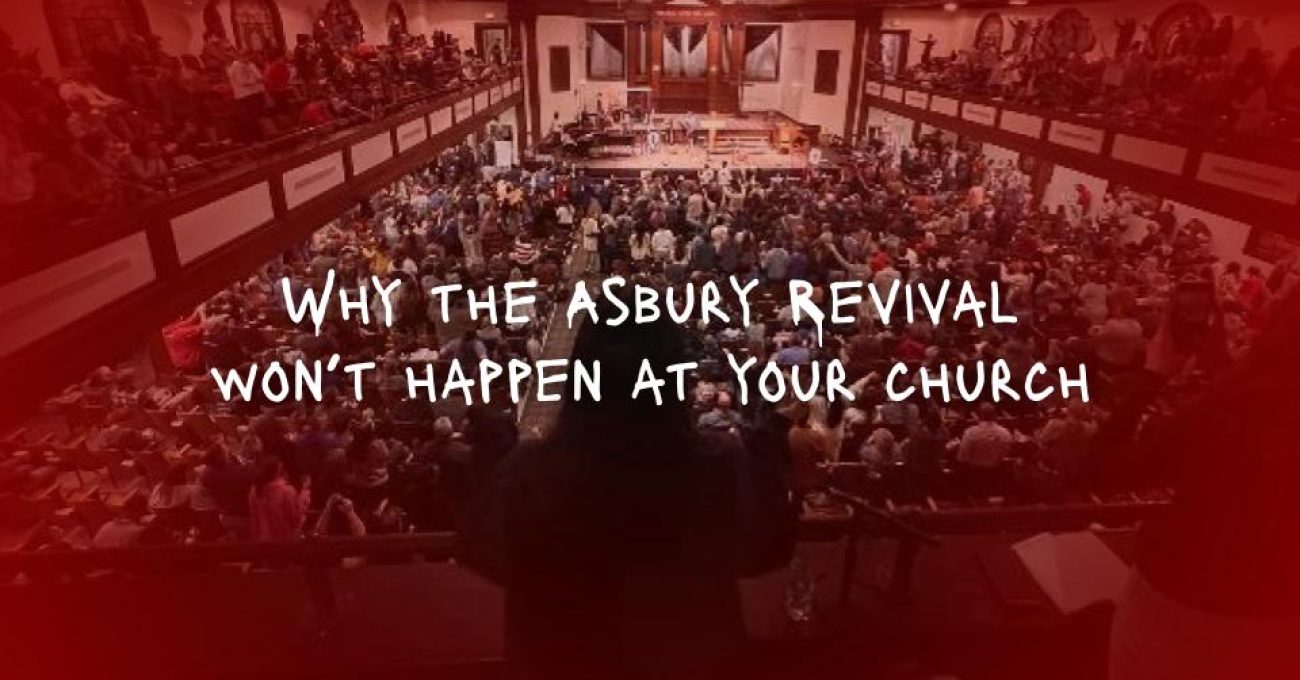
These are the words of Christians all over the US this week after seeing a revival take place at Asbury University in Kentucky.
After their mandatory chapel service ended last Wednesday, students felt the need to keep praying, to keep singing, to stay longer in the presence of God.
It’s been 50 years since something like this happened at Asbury… and it’s garnering national attention.
Meanwhile, American Christendom is getting excited, maybe even envious about it.
Why can’t it happen at your church?
First of all, in reality, it could.
I think many of us assume that these things happen because God plays a game of celestial roulette and then determines where He is going to “show up” and bless with His presence.
That’s not exactly concurrent with what we see in scripture. As we look at the whole of scripture, what we see is that God’s presence is everywhere, and there is no escaping it. We see that God wants all people to come to repentance. We see that His temple is the very lives of the people that worship Him. So that presence of God is available to all of us. We also see that when we repent of our sins, seek His face, call on His name, He answers us. Again, looking at the whole of scripture, the requirement for this is “when we seek Him with all our heart.”
So why DOESN’T it happen at your church?
Let’s list some reasons.
You are hungry for the wrong things.
It’s 12:30. Your stomach is growling. The worship leader just started the bridge ONE MORE TIME. Your kids are getting antsy. Kickoff for the game is starting soon. Your roast is in the crockpot and you don’t want it to overcook….
The recipe for this revival in Asbury was that some college kids decided that they wanted to spend more time in prayer in the presence of God. They didn’t let the other things get in the way. And then some of them that did need to leave, brought back food or coffee or pillows, to help support what was happening.
You expect that pastor to do it.
You keep asking your pastor and church leaders to do something like this, but they just won’t do it…
The pastor’s job is to equip the saints for works of service. The work is ALL OF OUR WORK. You don’t get to have a vision for something and then give it to someone else to do.
At Asbury, this revival wasn’t planned. Nobody said, “Hey, stay after and pray for the next week non-stop.” People just prayed, sang, and spent time in the presence of God. Most of what’s happening there is separate from “staff”…. It’s the students just committed to spending time in prayer and worship.
I also want to make it clear – let’s say the church building needed to be closed… that doesn’t and shouldn’t stop a revival. These folks in Kentucky are worshiping in the chapel, but they could leave and go out and still be in the presence of God. (In fact, I think that is the GOAL of revival… to spread it out into the world.)
Your sin gets in the way.
You want God to send you revival. But you also want to keep holding on to your pet sin.
Maybe you don’t want to hold onto it – but you keep holding onto it because you refuse to be broken over it – to confess it to another person.
Sin separates us from God. Can God move despite our sin? Sure. But don’t you think it’s a bit ridiculous to expect Him to?
You want it done YOUR WAY
You want revival. And you want it now. And you want it with plenty of music, but not THOSE songs. And we better make sure we have the good coffee. And someone please make sure LouAnne is turned down on the soundboard, because she sounds horrible. We’ve always done it this way, and it’s the right way to do it… And somebody better open up the nursery and watch those kids. Etc. etc. etc….
So much of the personal preferences and the things we do in our american church services we do because we’ve always done them. We have made so many things “sacred” because it’s all we have known of church. If we look at the church in Acts- they set the model for us. And it was pretty simple. Somewhere along the way, we have added a LOT of things to what the original church was meant to be. And we’ve gotten attached to them. Honestly, we’ve built a lot of golden calves in our church experience.
What if the state of REVIVAL was not ever meant to be something “special”… but was rather the very intention of Jesus when He founded the church?
What if it’s not that God isn’t pouring out His spirit everywhere on all people trying to revive His church, but rather, He is pouring it out, and we’ve so comfortable in our buildings and under our umbrellas that we refuse to see it? What if we’re actually complaining about the revival rain that God is sending to us because it’s inconvenient, or doesn’t look like what we WANT it to look like?
Do you want to see a revival like this?
Then start living like you want to see it. Be the one that gets on their knees and prays at the altar, or in your seat, or in the parking lot, or your living room.
Be the one who repents of your sins, confessing that to your brothers and sisters and to God.
Be the one that sings loudly, with hands raised and eyes fixed on the King of Kings.
Do the things God says to do. Love the people God says to love. Preach the gospel. Make disciples and teach them to live the way Jesus wants them to.
The recipe is simple. It’s all the other stuff that gets in the way.