

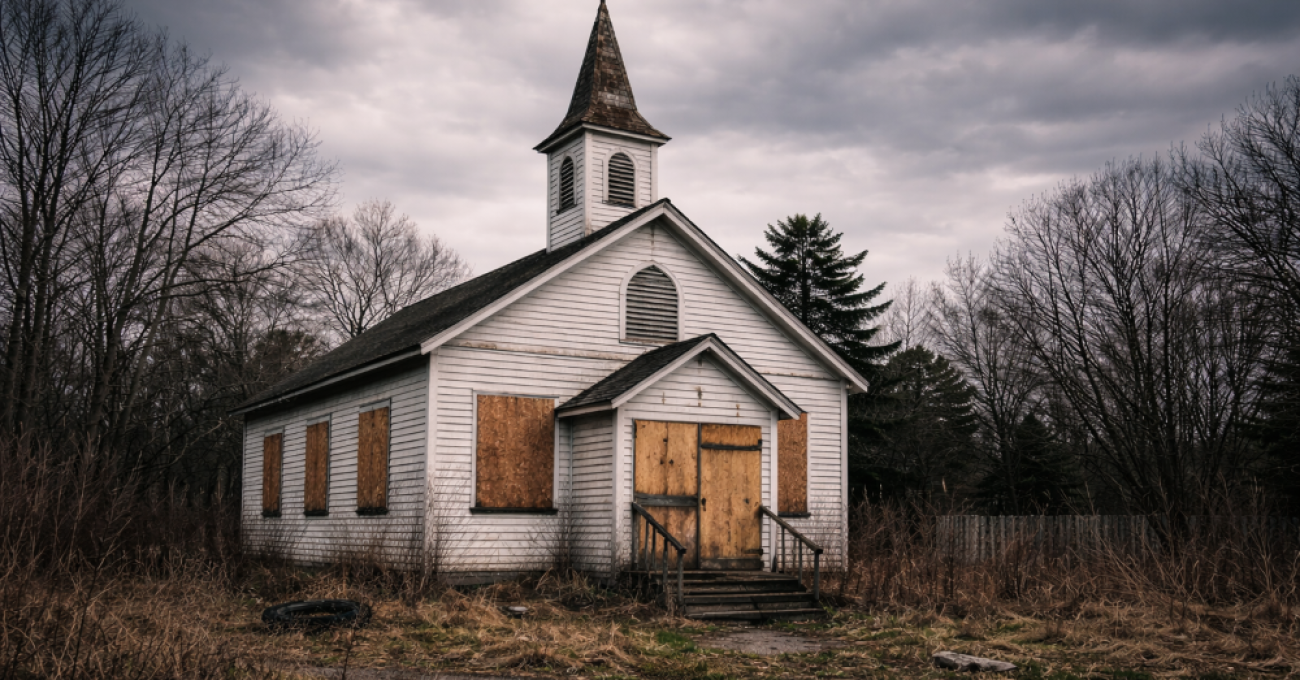

There’s a question church leaders and pastors sometimes ask themselves when they’re trying to measure impact:
“If our church disappeared tomorrow, would anyone notice?”
Recently, I explored that question directly in a piece I wrote for my own church and community in Bradford, Pennsylvania. In that article, I asked what would actually be lost if Open Arms Community Church vanished overnight — not hypothetically, but practically, relationally, and locally.
But wrestling with that question led me deeper — to the heart of what it actually means to be the church.
When Church Becomes an Event
One of the things Francis Chan challenges in Letter to the Church is this idea that church is what happens on Sunday morning. He writes:
“We have started to believe that if people show up to a church service, they are actually being the church.”
(from Letter to the Church )*
That hits right at the heart of the disconnect many communities feel when a church closes its doors. The loss isn’t the gathering itself — it’s what the gathering should have been producing: people shaped to love, serve, and walk with others in life’s real moments.
The Quiet Work No One Counts
Church impact is often measured in numbers — attendance, budgets, social media reach. But none of those metrics capture the quiet, invisible work that actually shapes a town.
It looks like:
- Someone answering their phone when another person is unraveling
- A few people consistently showing up for those trying to get sober
- Meals cooked quietly, prayers offered privately, rides given without recognition
- Relationships that form before crisis hits — not just after
Chan pushes this exact point when he says the goal isn’t to attract people to an event, but to equip them to obey Jesus in everyday life:
“The goal of the church was never to attract people to a service, but to equip people to obey.”
(from Letter to the Church )*
That kind of presence doesn’t announce itself. And because it doesn’t announce itself, it’s easy to underestimate its value — until it’s gone.
When Churches Close, Communities Thin Out
Across the U.S., many congregations are closing their doors. In some towns, the buildings are repurposed or demolished — but what isn’t easily replaced is the people network that formed around them.
One deep question Chan presses is this:
“If the Church were to disappear, would anyone notice? And if so, what would they miss — a building, or a people?”
(from Letter to the Church )*
That’s not a rhetorical challenge — it’s an invitation to evaluate what churches are actually incarnating in their communities.
When a church disappears, what often goes with it is:
- A consistent place of belonging for people on the margins
- Informal care networks that don’t require paperwork or eligibility
- Leaders and members who know names, stories, and wounds
- A culture of showing up without needing to be paid or praised
Social services matter. Nonprofits matter. But churches uniquely occupy a space where relationship comes before efficiency — and that’s not easily replaced.
Being Missed Isn’t the Same as Being Seen
Some church evaluation tools ask “Would the town miss us if we were gone?” But what matters far more is who would miss you and why.
Chan’s emphasis isn’t on visibility, but on obedience — on whether people shaped by the church are still living it out when the building is closed.
If a church were gone tomorrow, the real question isn’t whether the town would notice — it’s whether the people formed by the church would still be showing up, still loving well, still serving, still caring.
Because when churches do their best work, they don’t just gather people — they form them.
And formed people don’t disappear when buildings do.